
Looking Them in the Eye: What is an Interrotron and Why Do You Need One?
Have you ever watched a documentary or a high-end commercial where the person being interviewed looks directly into the lens? Not slightly to the left where the interviewer is sitting, but straight at you.
There’s an intense, unfiltered intimacy to it. It feels like they are baring their soul directly to the audience.
Achieving this look used to mean forcing a non-professional actor or interviewee to stare blankly into a cold glass camera lens while trying to recount a deeply personal or technical story. The result? They look terrified, stiff, or robotic.
Enter the Interrotron.
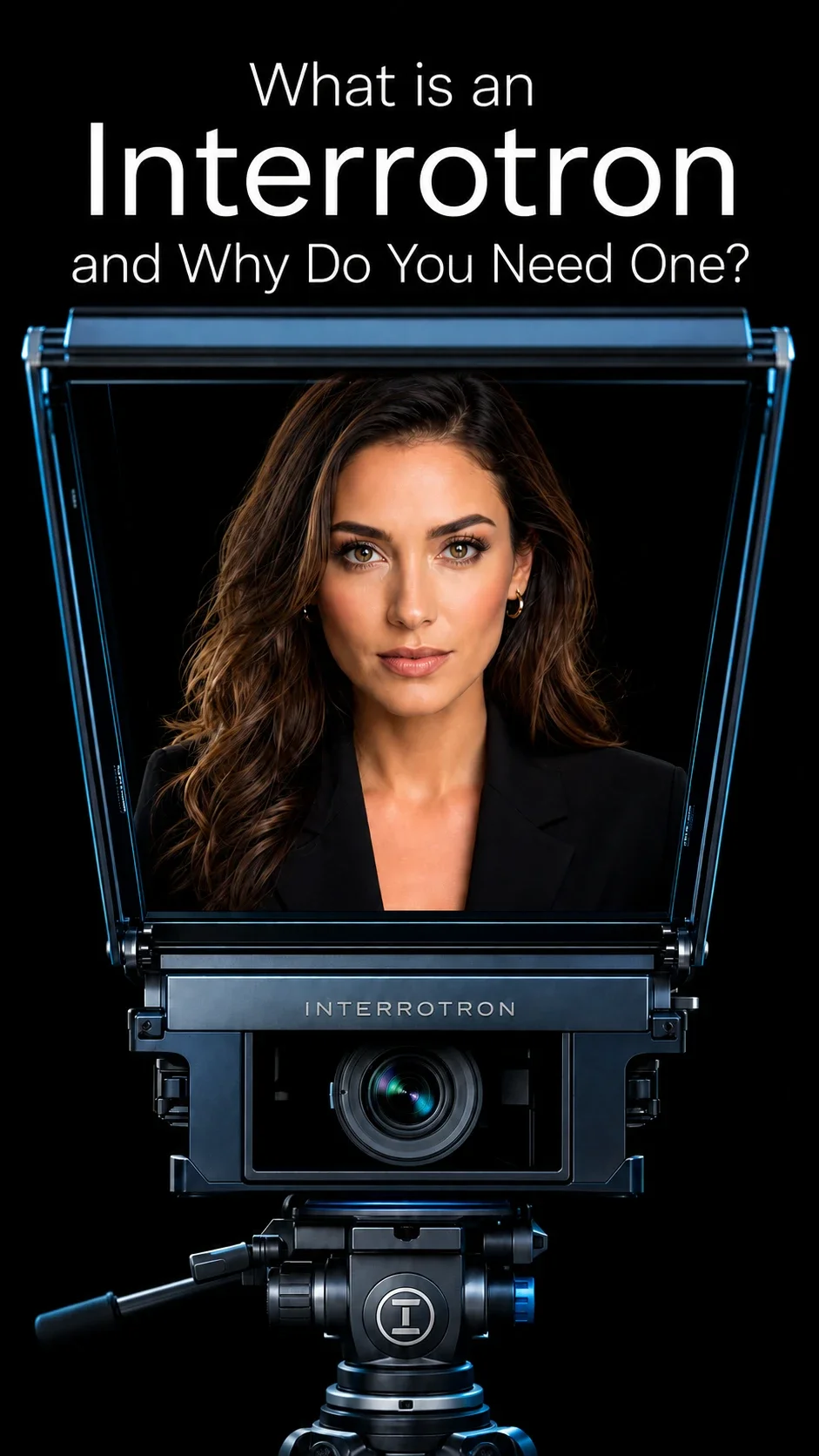
Invented by legendary documentary filmmaker Errol Morris (the mastermind behind The Thin Blue Line and The Fog of War), the Interrotron is a clever camera modification that uses a modified teleprompter setup to allow the interviewer and the interviewee to look directly at each other while looking directly into the camera lens.
The name itself is a mashup of two words: interrogation and terror (though Morris originally used it ironically because it actually removes the terror from an interview).
How It Works
Instead of scrolling text like a traditional teleprompter, the Interrotron uses two teleprompters connected to two different cameras.
The Interviewee’s View: The person being interviewed looks at a two-way mirror over the camera lens. Reflected in that mirror is a live video feed of the interviewer’s face.
The Interviewer’s View: The interviewer looks at their own teleprompter/mirror setup, which displays a live feed of the interviewee's face.
Because both individuals are looking at the video feeds positioned directly over the camera lenses, they are making true eye contact with each other. But to the camera recording the footage, the interviewee is looking perfectly dead-center into the lens.
Why Would You Want One?
If you are a filmmaker, corporate videographer, journalist, or content creator, adding an Interrotron setup to your toolkit is a massive game-changer. Here is why:
1. Instant Comfort for Non-Actors
Putting a normal human being in front of a cinema camera, massive lights, and a full crew is a recipe for anxiety. People naturally lock up. The Interrotron completely hides the intimidating camera glass and replaces it with a warm, reacting human face. Your subject forgets the tech is there and just has a conversation with you.
2. Unmatched Audience Engagement
When a viewer watches your final video, the subject is looking right at them. In video psychology, direct eye contact builds trust, authority, and deep emotional resonance faster than the traditional "off-camera look."
3. Better Performance for Corporate Videos
If you are directing a CEO or a founder who struggles to read a teleprompter or talk to a blank lens, the Interrotron changes the dynamic entirely. Instead of giving a speech, they are answering a friend.